What is a Hot Water Coil? | HVAC Winter Guide
Understanding hot water coils and how to prepare them for winter.
As temperatures begin to drop and heating systems switch into winter mode, building owners and facility managers depend on their HVAC systems to deliver reliable, consistent heat. One important component responsible for heating is the hot water coil.
What Is a Hot Water Coil?
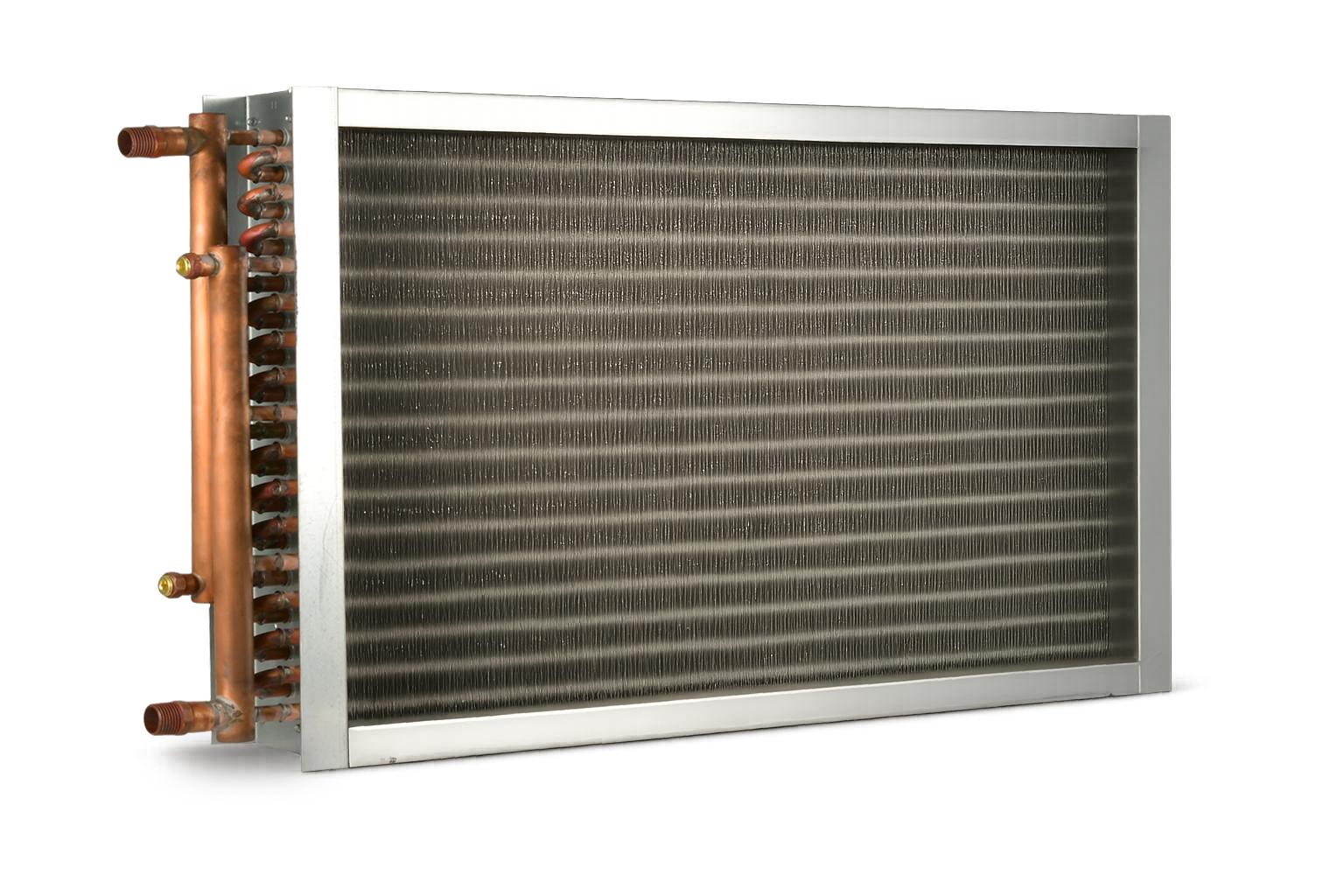
A hot water coil is a heat exchanger used in HVAC systems to transfer heat from hot water to the air passing through the coil. A hot water coil acts as the heat-transfer point between the building's hot water system and its air distribution system.
Hot water from a boiler or other heating source circulates through the coil's tubes. As air passes over the coil's fins, heat transfers from the hot water into the air. The warmed air is then distributed throughout the building to provide heating.
Hot water coils are commonly found in:
- Air handling units (AHUs)
- Rooftop units
- Fan coil units
- Dedicated outdoor air systems (DOAS)
- Make-up air units
- Heating and ventilation systems
- Commercial and industrial HVAC equipment
Why Hot Water Coils Matter During Winter
A properly functioning hot water coil is critical when outdoor temperatures fall. If a coil becomes damaged, clogged, corrode or begins leaking, the HVAC system may struggle to maintain the required indoor temperature.
Winter can also introduce an additional concerns when temperatures drop below freezing. If water remains inside a coil while the coil is exposed to frigid temps, the water can freeze and expand. That expansion can potentially damage or rupture the coil, leading to loss of heating capacity, increased maintenance costs or property damage.
Signs Your Hot Water Coil May Need Attention
Now is the time for facility teams to look for signs that a hot water coil needs service or replacement.
1. Uneven or Insufficient Heating
If an HVAC system is running but the space isn't reaching the desired temperature, the hot water coil could be one of several components worth inspecting.
2. Visible Corrosion
Corrosion on the tubes, fins, headers or surrounding components can indicate that a coil has experienced moisture or environmental exposure that may affect its long-term performance.
3. Water Leaks
Visible water around the coil or signs of moisture inside the air-handling unit should be investigated. A leaking coil can affect both HVAC performance and surrounding equipment.
4. Damaged or Blocked Fins
Bent, dirty or damaged fins can restrict airflow and reduce heat transfer. Keeping the coil clean and maintaining proper airflow can help support efficient operation.
5. Repeated Coil Failures
If a facility is repeatedly repairing or replacing the same coil, it may be worth evaluating whether the coil's construction, materials, capacity or application is appropriate for the system.
Hot Water Coil Maintenance Before Winter
Don't wait for the first cold snap to inspect your hot water coil. Checking coils before winter will help identify leaks, corrosion, airflow problems and other issues before they become an emergency. When replacement is necessary, having the correct coil ready ahead of heating season will help minimize HVAC downtime. Depending on the system, maintenance may include:
- Inspecting tubes, fins, headers and connections
- Checking for leaks or signs of corrosion
- Cleaning dirt and debris from the coil
- Inspecting fins for damage
- Verifying proper water flow
- Checking valves and controls
- Confirming adequate airflow
- Inspecting insulation and surrounding components
- Addressing any known coil damage before temperatures drop
Custom Hot Water Coil Replacement
Not every coil problem requires complete replacement. However, replacement may make sense when a coil has extensive corrosion/damage, repeated leaks or is no longer performing as required. Instead of modifying existing piping to accommodate a different coil, a custom replacement can be engineered to match the existing coil's dimensions, connections and performance requirements.
Nationwide Coils provides custom hot water coil replacements for all major OEM brands. Specified for a wide range of commercial and industrial HVAC applications, our replacement coils are built to match existing capacity and dimensions for precise fit and maximum, long-term performance.
FAQs
What is a hot water coil used for?
A hot water coil transfers heat from hot water into the air within an HVAC system. It is commonly used for heating in air handling units, rooftop units, fan coil units and other commercial HVAC equipment.
How long do hot water coils last?
The service life of a hot water coil depends on factors such as construction materials, water quality, operating conditions, maintenance and the environment in which the coil operates.
Can a hot water coil freeze?
Yes. If water inside a coil freezes, expansion can damage the coil. Proper system design, controls, airflow, maintenance and freeze protection are important in cold-weather applications.
Can a hot water coil be replaced with a custom coil?
Yes. A replacement hot water coil can be custom engineered to match an existing application, including dimensions, connections, materialsn and performance requirements.
When should I replace my hot water coil?
Replacement may be appropriate when a coil has persistent leaks, extensive corrosion, significant damage, repeated failures or no longer meets the heating requirements of the HVAC system.